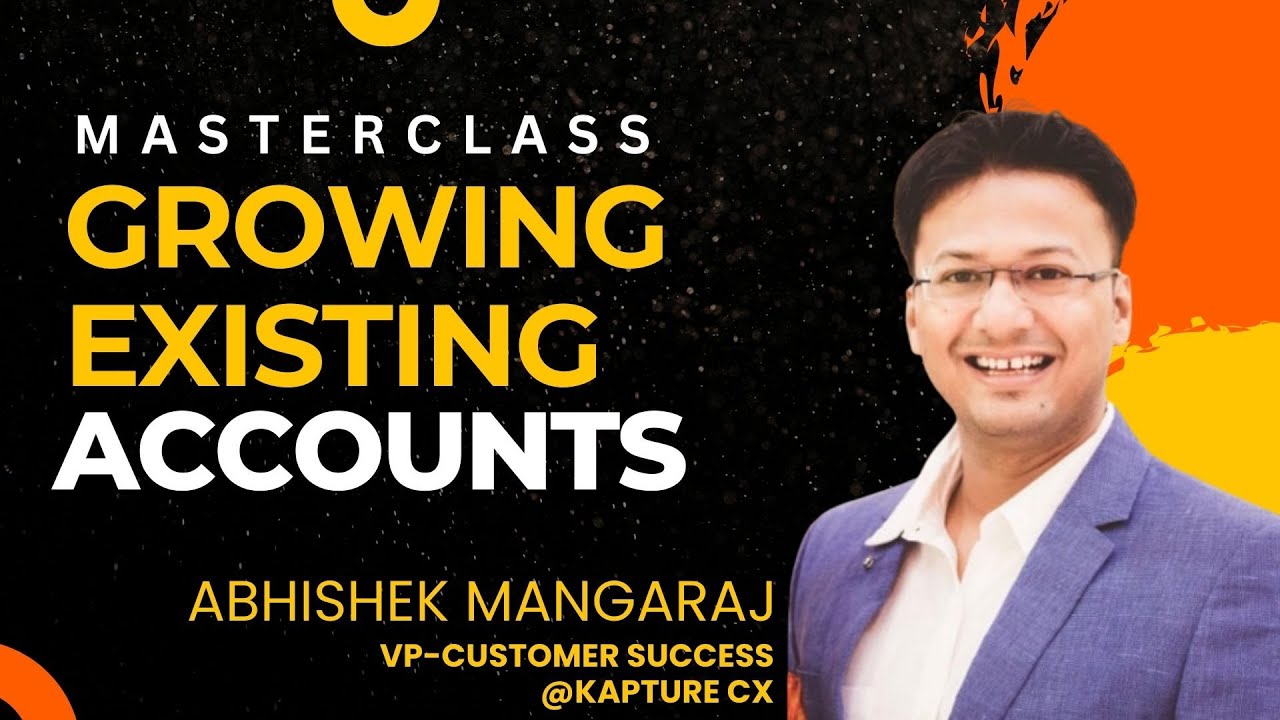
Abhishek Mangaraj, an expert in customer account management, asserts that unlocking hyper-growth with existing clients demands a fundamental shift: moving beyond traditional selling to a distinct, consultative approach focused on solving their unique problems. He explains why this strategy, which differs significantly from new customer acquisition, is the ultimate engine for sustainable business expansion.
approach each customer with the idea of helping him or her solve a problem or achieve a goal not of selling a product or service
— Abhishek Mangaraj
This systematic, 9-step process moves beyond reactive efforts to help businesses proactively identify and capitalize on growth opportunities within their existing customer base. It emphasizes a data-driven approach to understanding your most valuable clients.
For instance, an expert might advise segmenting customers by vertical or Annual Recurring Revenue (ARR) to pinpoint the 20% contributing 80% of total revenue. Following this, deep, consultative conversations are initiated to uncover their specific pain points and strategic goals, paving the way for tailored solutions and expansion.
Turn customer data and dialogue into your most potent growth accelerant.
Successful customer expansion isn't just about identifying opportunities; it's about anticipating and mitigating the common challenges that can derail growth. This framework outlines the nine most frequent hurdles encountered, ranging from internal resistance to external market dynamics.
A key strategy involves proactively addressing issues like market saturation by conducting thorough market demand analysis, or overcoming brand recognition challenges by leveraging compelling success stories from similar clients within the same industry vertical. By understanding these obstacles in advance, businesses can develop robust strategies to navigate them effectively.
Anticipate and address expansion roadblocks before they derail your growth.
True customer expansion often requires more than just the sales team; it demands a unified effort across the entire organization. This framework emphasizes the critical role of breaking down internal departmental silos—between sales, product, delivery, and marketing—to foster a collaborative environment.
By facilitating open conversations where, for example, sales teams share direct customer feedback with product development, innovative ideas can emerge that directly address client needs. This cross-pollination of insights can lead to new product features, service offerings, or market approaches that unlock significant expansion opportunities and drive innovation.
Internal collaboration is the secret weapon for external customer growth.
Expansion is defined as strategically extending a business's market, revenue, and customer footprint beyond the initial primary contract. This framework outlines core strategies that move beyond simple transactional sales to build long-term value and deepen customer relationships.
Key tactics include entering new geographies or markets, introducing enhanced products and services through targeted upselling and cross-selling to existing clients, and forming strategic partnerships that scale offerings. Crucially, consistent communication of value at each growth milestone ensures customers understand the evolving benefits of their partnership.
Expansion is not just more sales; it's a strategic extension of your entire business.
This framework challenges the traditional view of customer retention merely as a cost-saving measure, repositioning it as the fundamental prerequisite and most effective catalyst for future expansion and increased revenue. A happy, retained customer is not only loyal but also your most powerful advocate and source of new business.
A customer who feels valued and supported is inherently open to exploring additional products or services, creating fertile ground for upselling and cross-selling opportunities. Furthermore, their positive word-of-mouth becomes a potent, organic marketing tool, attracting new clients and reinforcing your brand's reputation for customer satisfaction and problem-solving.
Secure retention first, then watch your expansion opportunities multiply.
Sales is about selling products/services.
This perspective shifts the entire sales interaction from a transactional, product-focused pitch to a consultative partnership. By genuinely understanding and addressing a customer's underlying challenges, businesses build deeper trust, long-term relationships, and ultimately, more sustainable and expansive revenue streams.
New customer acquisition and existing customer management use the same approach.
Acquiring new customers often involves convincing them of initial value, while managing existing clients demands a focus on evolving needs, continuous value delivery, and identifying organic growth potential. A distinct, tailored strategy for existing accounts fosters deeper engagement and unlocks expansion opportunities that a generic acquisition approach would miss.
After a sale, the focus is only on retention; expansion is a separate, later stage.
A happy, well-retained customer is your most valuable asset for future growth. Their satisfaction naturally leads to openness for additional business, referrals, and serves as a fertile ground for identifying new needs and opportunities to upsell or cross-sell. Retention, therefore, isn't a passive state but an active strategy for expansion.
What are the biggest challenges you're currently facing that impact your team's productivity or strategic goals?
Uncovers critical pain pointsIf you could wave a magic wand, what's one major objective you'd achieve in the next 12-18 months, and why is that important?
Identifies aspirational goals & motivationsHow does your current solution help or hinder your efficiency in [specific area relevant to your product/service]?
Assesses current solution effectivenessBeyond our current engagement, what other areas of your business are you looking to innovate, optimize, or expand into?
Reveals potential expansion verticalsWhat does "success" look like for your organization in this partnership, not just short-term, but 1-3 years down the line?
Defines long-term value & partnership visionWho are the key stakeholders involved in decisions for new initiatives, and what are their individual priorities or concerns?
Maps internal decision-makers & influencesShift your mindset from pushing products to understanding and solving customer problems. Master consultative selling techniques to uncover deeper needs, build trust, and naturally identify expansion opportunities within your existing accounts. Your goal is to be an invaluable resource.
Recognize that existing customers are your most potent growth engine. Foster a company culture that prioritizes retention and cross-functional collaboration. Implement frameworks to systematically map growth potential and proactively address obstacles, ensuring sustainable hyper-growth.
Beyond acquisition, focus your efforts on demonstrating continuous value to current clients. Develop content that addresses their evolving challenges and showcases how your solutions facilitate their growth, supporting both retention and the identification of new expansion opportunities.
Develop foundational skills in active listening, problem identification, and value articulation. Understanding the customer lifecycle and the nuances of account management will equip you for strategic roles in sales, business development, and customer success, driving long-term business growth.
when you keep a customer happy you'll realize that the customer is always open to do more and more business with you and there can be a great positive word of mouth
— Abhishek Mangaraj
00:00 Introduction
Abhishek Mangaraj, an expert in customer account management, emphasizes that successful customer growth hinges on a fundamental shift from selling products to solving problems. He advocates for a distinct, consultative approach for existing clients, differing significantly from new customer acquisition strategies. His principles focus on mapping existing customers for growth potential, understanding expansion challenges, and leveraging retention as a core driver for future business.
Customer Growth Expert · Account Management Strategist · Consultative Sales AdvocateJoin thousands of Indian professionals learning from industry experts.
Explore All Courses →