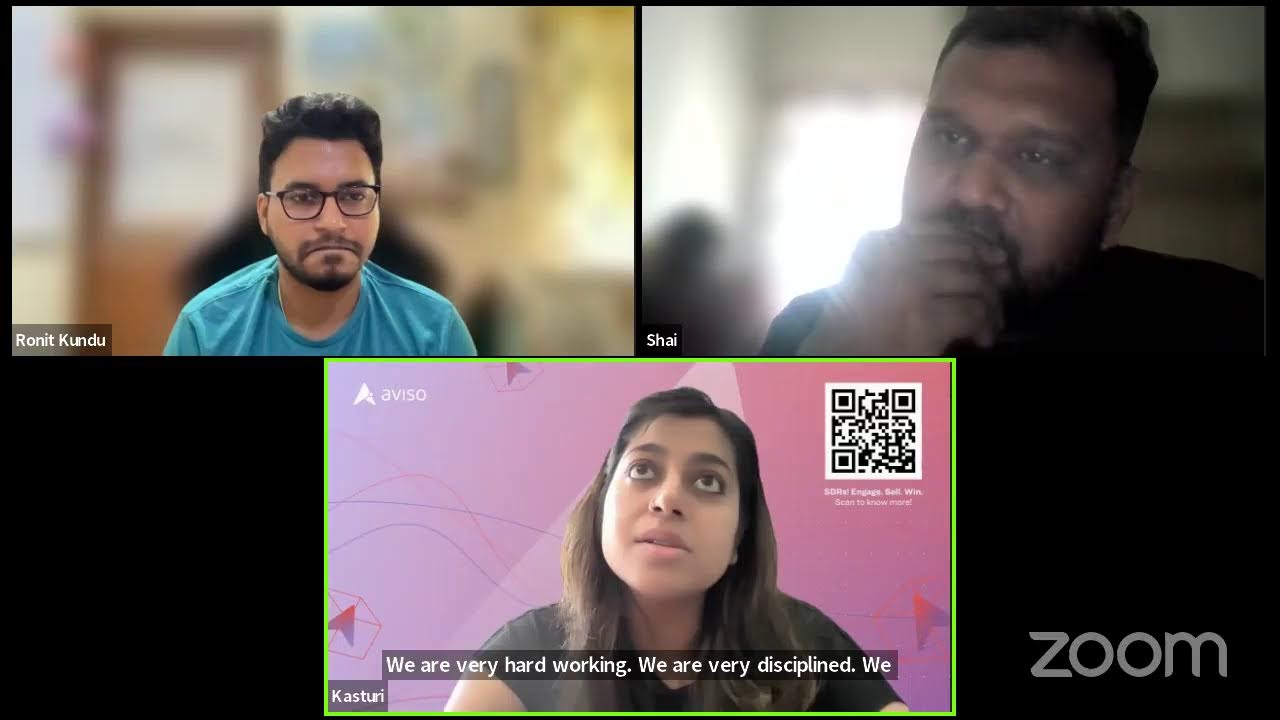
Casturi, VP of Sales at AISO AI, reveals how artificial intelligence is transforming B2B sales. She argues that AI's true power lies not in replacing human interaction, but in equipping sellers with intelligent insights and automating mundane tasks, allowing them to focus on meaningful engagement and close more deals.
Nobody wants to be sold to. Nobody likes to be sold to. So we as sellers need to be mindful that hey, we don't want to be too pushy.
The traditional sales approach often involves broad, aggressive outreach, hoping to catch a prospect at the right time. However, Casturi from AISO AI emphasizes that this can be counterproductive, as buyers are increasingly turned off by unsolicited and irrelevant pitches. The key is to shift towards mindful engagement, focusing on prospects who have already demonstrated a clear intent to buy or a specific need that aligns with your product.
AI-first companies like AISO AI are at the forefront of this transformation. They equip sellers with advanced tools to identify and interpret buyer signals, such as website visits, content downloads, or engagement with specific marketing materials. This allows sales teams to understand where a prospect is in their buying cycle and what their specific interests are before making contact, ensuring that every interaction is timely, relevant, and valuable.
One of the biggest time sinks for sales professionals is spending hours on cold calls, only to discover that many prospects are not a good fit or not ready to buy. Casturi advocates for automating the initial stages of lead qualification to filter out unsuitable prospects before a human sales representative invests their time.
This framework suggests leveraging digital tools, such as automated forms, surveys, or chatbots delivered via email or messaging apps like WhatsApp. These tools can gather crucial qualification data—like budget, specific requirements, or existing technology stacks—efficiently and at scale. For instance, in the example of luxury elevators, prospects can fill out details about their building specifications or budget. Only if these automated responses meet predefined criteria does a lead become a "warm lead" deserving of a personal call, dramatically increasing sales efficiency.
In the past, sales outreach often felt like shooting in the dark, with sellers relying on intuition or limited data. The advent of AI is fundamentally changing this by ushering in an era of "revenue intelligence." This involves using sophisticated algorithms to analyze vast amounts of data on customer and prospect behavior, preferences, and market trends.
As Casturi points out regarding AISO AI's role, this intelligence provides sellers with unprecedented convenience and insight. Instead of guessing, sales teams can now understand specific buying signals, predict customer needs, and tailor their messaging with precision. This data-driven approach transforms sales from a reactive, guesswork-laden process into a proactive, strategic operation, leading to more impactful and successful engagements.
Many sales organizations struggle with inconsistent performance across their teams, often due to a heavy reliance on highly experienced individuals for complex tasks like lead scoring, prioritization, and nurturing. Casturi implicitly addresses this challenge by advocating for the standardization of sales processes through AI and automation.
By integrating AI into CRM systems, routine yet critical tasks can be automated. This includes automatically scoring leads based on predefined criteria, categorizing them as hot, warm, or cold, and even initiating automated nurturing sequences. This standardization means that even less experienced sales personnel can effectively manage early-stage leads, ensuring consistent quality and efficiency across the entire sales funnel, ultimately scaling the team's overall productivity.
In an age of information overload, buyers are overwhelmed with options and easily alienated by aggressive sales tactics. AI helps identify genuine interest and buyer intent, enabling sellers to engage meaningfully only when a prospect is ready. This allows for more effective, less intrusive interactions that respect the buyer's journey and build trust.
Automating the early stages of qualification is a significant time-saver for sales teams. By filtering out unsuitable prospects through digital tools, human sales representatives can focus their expertise and energy on leads who have already demonstrated a basic fit and interest. This makes their engagement far more efficient and productive, leading to a higher conversion rate.
By codifying and automating the rules for lead management—such as scoring, prioritization (hot/warm/cold), and nurturing sequences—AI reduces the need for subjective human judgment in routine tasks. This not only standardizes the sales process across the team but also expands the talent pool, enabling organizations to scale their sales operations more efficiently with varied experience levels.
"What specific challenges are you currently facing with your existing sales processes or lead generation efforts?"
Purpose: Identify pain points for AI solutions."How do you currently qualify your leads, and what percentage of your sales team's time is spent on unqualified prospects?"
Purpose: Uncover inefficiencies in qualification."What are your key metrics for sales success, and where do you see the biggest gaps in achieving those targets?"
Purpose: Align AI benefits with business goals."Are you currently using any CRM or sales automation tools, and what are their biggest limitations for your team?"
Purpose: Understand current tech stack & integration needs."How do you currently gather and act on buyer intent signals, and what insights would be most valuable to your sales reps?"
Purpose: Assess data-driven selling maturity."What is your team's average sales cycle length, and where do you believe AI could help accelerate it without being pushy?"
Purpose: Pinpoint areas for efficiency gains.Leverage AI tools for lead scoring and intent detection to prioritize prospects. Automate initial qualification steps like information gathering via smart forms, freeing up your time for high-value, personalized engagement with genuinely interested buyers.
Implement AI-driven CRM automation for consistent lead management, even with a lean team. This reduces reliance on individual star performers for routine tasks, allowing you to scale your sales process efficiently and predictably as your business grows.
Collaborate closely with sales to define buyer intent signals. Use AI in your marketing stack to generate richer lead data, enabling sales to craft highly personalized campaigns and ensuring marketing efforts directly contribute to revenue intelligence.
Familiarize yourself with CRM automation, revenue intelligence platforms, and intent data tools. Understanding how AI streamlines sales operations will make you an invaluable asset, allowing you to contribute effectively even without years of traditional sales experience.
How it's become so much more easier and how it is so much more convenient to be not on the face and be more meaningful when you're selling.
Join thousands of Indian professionals learning from industry experts.
Explore All Courses →