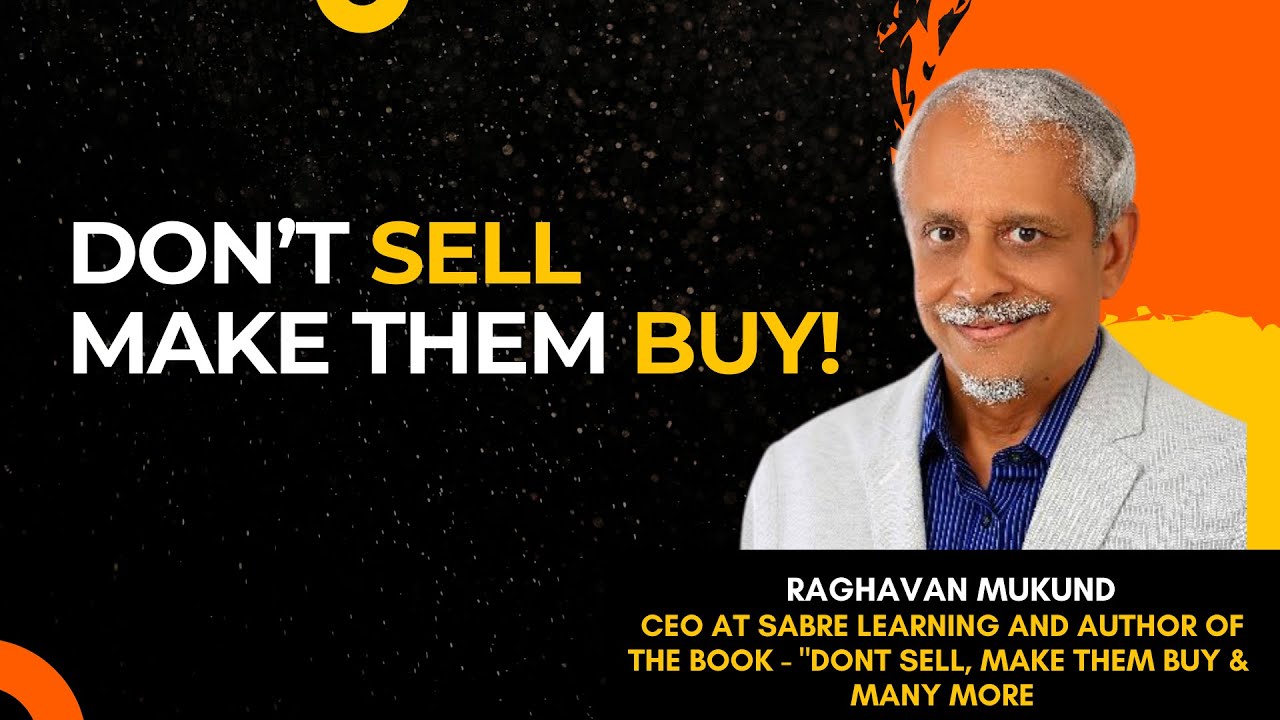
The masterclass expert argues that traditional selling is obsolete. In an age of information overload and commoditized products, successful sales now hinges on understanding deeply buried customer needs and building genuine human rapport that AI cannot replicate.
You cannot replace the sales guy; AI can replace marketing, but not human sales.
In a market where products are easily compared, many offerings become commodities, purchased primarily on price and readily apparent features. This leads to a constant race to the bottom, eroding profit margins and differentiation. The expert highlights that true value products, however, transcend this by addressing deeper, often evolving, customer needs.
Consider the humble potato: bought for a basic gravy, it's a commodity. But when a customer seeks organic potatoes to fulfill a health-conscious need, its value elevates. Similarly, a basic carbolic soap is a commodity. Add Tulsi for therapeutic benefits or lime for a refreshing experience, and it transforms, meeting new, specific needs and commanding a premium.
In today's information-rich, yet often skeptical, environment, effective value selling requires a structured approach. The expert introduced the Value Creation Loop, a three-step process designed to navigate customer distrust and information overload. It begins with the crucial task of understanding or actively creating a customer's underlying value needs.
Once these needs are identified, the next step is to satisfy them with benefits that are mutually advantageous for both the customer and the salesperson. This isn't just about closing a deal; it's about ensuring genuine satisfaction. The final, and equally vital, step is to build long-term relationships, fostering loyalty and future opportunities. This continuous cycle demands deep human interaction, a capability that AI, despite its advancements, cannot replicate.
Modern customers rarely articulate their needs directly and openly. Instead, they present subtle 'triggers'—incidents or observations that hint at an underlying problem or desire. A skilled salesperson's role has evolved from simply listening to stated needs to expertly recognizing and interpreting these triggers, then converting them into deeper, often unarticulated, value needs.
For instance, dropping a phone and cracking its screen is a trigger. A traditional salesperson might offer a repair. A value-based salesperson, however, would convert this trigger into the deeper need for an unbreakable screen, offering a more robust solution. Similarly, for someone obsessed with selfies, the trigger isn't just a desire for a new phone, but a need for a panoramic push-up camera, addressing a specific aspirational need beyond basic functionality.
Building effective rapport is not an accidental occurrence but a deliberate, sequential process, fundamental for both successful selling and empathetic servicing. It starts with the willingness to share emotions, creating an initial human connection. This emotional sharing is the gateway to deeper engagement, allowing individuals to truly connect on a personal level.
From this connection, trust begins to form. As trust solidifies, customers feel comfortable enough to open up, sharing their genuine concerns, desires, and underlying needs. This progression—from shared emotions to connection, then trust, and finally a lasting relationship—is the critical 'pre-phase' that ensures any subsequent sales or service interaction is not only effective but also deeply meaningful and sustainable.
Rapport, the cornerstone of human connection in sales, is achieved through a delicate resonance across three distinct communication frequencies: body language, voice, and the actual words spoken. Crucially, the expert revealed that over 93% of effective rapport building relies on non-verbal cues—specifically, body language and vocal tone and inflection. The words themselves contribute less than 7% to this vital connection.
This stark imbalance underscores why building genuine rapport remains a uniquely human skill, largely impervious to AI replication. Imagine a simple apology: spoken with a warm smile and a gentle, empathetic tone, it conveys sincerity and builds bridges. The exact same words, delivered with a flat voice and stiff posture, communicate indifference or even insincerity. Mastering these non-verbal frequencies is paramount to forging profound human connections that AI cannot mimic.
While marketing is essential for building broad awareness and addressing community-level needs, it often leads to products being perceived as commodities, where price becomes the primary differentiator. True value selling, as advocated by the expert, necessitates a salesperson's ability to engage with individual customers, identify their unique and evolving needs, and articulate bespoke value propositions that marketing alone cannot achieve.
The expert draws a clear distinction between servicing and selling. Servicing, whether pre-sale or post-sale, focuses on meeting or exceeding a customer's existing expectations for a product or service they have already decided to acquire. Selling, conversely, is a proactive process of uncovering, understanding, or even shaping a customer's latent needs and building the foundational rapport that ultimately drives the buying decision itself. The two activities, while complementary, are fundamentally distinct in their objectives and approach.
In an era of information overload and heightened customer skepticism, simply telling compelling stories or presenting ready-made solutions is often ineffective. Today's customers are wary and time-constrained, rarely articulating their true, deep-seated needs upfront. The expert emphasizes that a salesperson's true skill lies in recognizing subtle 'triggers'—cues that hint at an underlying problem—and then expertly converting these triggers into unarticulated value needs. This approach allows for a deeper, more resonant connection than merely pitching pre-packaged narratives.
What recent challenges or frustrations have you experienced that made you start looking for a new approach in this area?
Purpose: Uncover Triggers & Latent NeedsBeyond the stated budget, what deeper problem are you hoping this investment will solve for your team/business?
Purpose: Identify Core Value & PrioritiesIf we could fast-forward one year, what specific, measurable outcome would make you feel this solution was truly successful?
Purpose: Define Success & Create Value VisionTell me about a time a solution you purchased didn't quite live up to expectations. What was missing?
Purpose: Build Trust & Understand Past DissatisfactionHow do you currently evaluate the success of new initiatives, and what emotional impact does that success or failure have on your team?
Purpose: Connect Emotionally & Understand ImpactIf you weren't concerned about price, what ideal characteristic would your perfect solution possess?
Purpose: Reveal Unconstrained Needs & AspirationsFocus intently on body language, vocal tone, and empathy during interactions. These non-verbal cues build over 93% of rapport, enabling you to uncover hidden customer needs that words alone cannot reveal. Practice active listening and mirroring to establish deeper trust.
Move beyond selling product features. Instead, become adept at recognizing subtle market triggers and translating them into tangible, evolving customer needs. Build your business around solving these deeper problems, fostering long-term relationships and escaping commoditization.
Understand that while marketing builds community awareness and addresses broad needs, individual sales requires a human touch. Collaborate closely with sales teams to identify how marketing-generated triggers can be converted into personalized value propositions, moving customers beyond price-based decisions.
Prioritize developing your emotional intelligence and communication skills. Learn to observe, empathize, and build rapport through genuine human interaction. These are invaluable, AI-proof skills that will serve you across any career path, enabling you to understand and influence others effectively.
It's not what you say, it's how you say it, how you do it which builds rapport.
Join thousands of Indian professionals learning from industry experts.
Explore All Courses →